
What Happens If a Witness Refuses To Testify in Your Defense?
Jan. 30, 2026
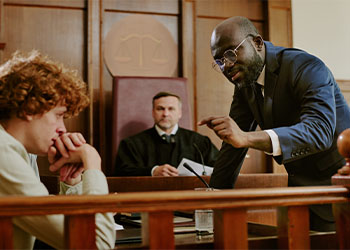 Being the subject of a criminal investigation or trial is one of the most stressful experiences you can face. The stakes are incredibly high, and the outcome often depends on the quality of the evidence presented, and witness testimony is frequently a cornerstone of a strong defense strategy.
But what happens when a key witness gets cold feet, becomes hostile, or refuses to show up? This can feel like a disaster, but it is not necessarily the end of the road.
If you are facing criminal charges in Oklahoma, you need an experienced criminal defense attorney who understands how to approach reluctant witnesses. Based in Oklahoma City, the team at Justin Lowe & Associates has served the State of Oklahoma for over twenty years. Attorney Justin Lowe understands that every piece of evidence matters, and he can help you explore your available options to present the truth in alternative ways.
When Might a Witness Be Reluctant to Testify?
A witness might refuse to testify for many reasons. Some may fear retaliation from other parties involved in the case. Others may not want to get involved or take time off work. In some instances, a witness might worry that testifying could incriminate them in a crime.
Regardless of the reason, a refusal to testify can present a major hurdle for your case and the evidence you want to present. In your criminal defense, you rely on witnesses to corroborate your alibi, challenge the prosecution's narrative, or provide character evidence. When that support is no longer available, you may need to shift your defense strategy.
Using a Subpoena to Call a Witness
If you are having difficulty getting a witness to show up in court, your criminal defense attorney may be able to subpoena them. A subpoena is a court order that requires a person to appear at a specific time and place to give testimony or produce documents.
Once a subpoena is properly served, the witness is legally obligated to appear. They cannot choose to ignore it because they are busy or uncomfortable. If a subpoenaed witness fails to show up, the court can issue a bench warrant for their arrest.
However, getting a witness to appear in court is only half the battle. A witness who is forced to appear against their will may become hostile or uncooperative on the stand. They might claim they do not remember key details or give minimal answers. Skilled criminal defense attorneys are often experienced in dealing with challenging witnesses and can employ strategies to extract the necessary information for your defense.
Fifth Amendment Rights Against Self-Incrimination
While a subpoena is a powerful tool, there is one major exception: the Fifth Amendment. Under both the U.S. Constitution and Oklahoma law, no person can be compelled to be a witness against themselves.
If a witness refuses to testify because their testimony would implicate them in a crime, they can "plead the Fifth." In this scenario, neither the prosecution nor the defense can compel a person to disclose specific incriminating facts.
This situation often arises in cases involving multiple defendants or complicated criminal activities in which the witness was also a participant. If a key defense witness invokes their Fifth Amendment right, the defense attorney must find other ways to introduce that evidence. This might involve finding other witnesses who observed the same events, using physical evidence or surveillance footage, or seeking immunity for the witness.
What Happens If Your Witness Turns "Hostile"?
Sometimes, a witness shows up, but their testimony is damaging, or they refuse to answer questions cooperatively. In legal terms, this person may be declared a "hostile witness."
Typically, during direct examination (when an attorney questions their own witness), they cannot ask questions that suggest the answer (i.e., "leading questions"). However, if the judge declares the witness hostile, the defense attorney may then use leading questions to challenge the witness's statements and credibility.
For example, instead of asking, "What did you see that night?" (an open-ended question), the attorney could ask, "Isn't it true that you saw the defendant leave before the fight started?" (a leading question). This tool allows the defense to control the flow of information if the witness is being difficult.
Using Prior Statements During Hostile Witness Testimony
If a witness changes their story on the stand or claims they cannot remember events they previously described, the defense attorney can often use their prior statements to question the witness's credibility. Some types of statements the defense may be able to use include statements given to the police, testimony at a preliminary hearing, or a deposition.
For example, imagine a witness told police on the night of the incident that the traffic light was red. Six months later, at trial, they testified that the light was green. The defense attorney can present the police report or transcript to show the jury that the witness's story has changed. This casts doubt on their current testimony and can help salvage the defense case even if the witness is not cooperating.
What If the Witness Is Unavailable?
In rare cases, a witness might truly be unavailable. They might have passed away, are severely ill, or cannot be located despite diligent efforts. If the witness gave previous testimony under oath (such as at a preliminary hearing) where the other side had a chance to cross-examine them, that prior testimony might be admissible at trial.
This is an exception to the hearsay rule. It ensures that the evidence is not lost simply because the witness cannot appear in person. However, this area of law is technical. The court must be convinced that the witness is truly unavailable and that the prior testimony is reliable and that is why you need an experienced criminal defense attorney such as Justin Lowe.
Strategies for When a Witness Refuses to Testify
If a witness has refused to testify and cannot be convinced to do so by subpoena or other legal means, you will need to pivot your defense strategy. This is not a time to panic, but a time to reassess. Some strategies you and your criminal defense attorney can pursue include the following:
Focus on the burden of proof: In a criminal trial, the burden of proof lies with the prosecution. The defense does not have to prove your innocence; they only need to create reasonable doubt. If your defense witness is missing, your attorney can double down on poking holes in the state's case.
Corroborating evidence: Your attorney can scour your case file for other evidence that proves the same point the witness would have made. Phone records, GPS data, text messages, or security camera footage can often be more reliable than human memory.
Character witnesses: If a fact-based witness is unavailable for your defense, character witnesses may help establish that you are a law-abiding citizen who is unlikely to have committed the crime.
Oklahoma Laws on Witness Tampering and Intimidation
If you are experiencing a reluctant witness in your criminal defense case, it is vital to approach them correctly. In Oklahoma, attempting to influence, intimidate, or prevent a witness from testifying is a serious crime.
Oklahoma Statute Title 21 § 455 specifically addresses preventing a witness from giving testimony. Willfully preventing or dissuading any person who has been duly summoned or subpoenaed as a witness from attending court is a felony offense. Additionally, Oklahoma Statute Title 21 § 504 outlines the penalties for destroying evidence or deceiving a witness to affect their testimony.
While your defense team can encourage a witness to tell the truth, they cannot use threats, bribes, or deceit to manipulate that testimony or keep the witness away. If you try to contact a witness directly to "convince" them not to testify, you could face additional felony charges for witness tampering. Speaking with witnesses should always be left to an experienced criminal defense attorney such as Justin Lowe.
How an Experienced Attorney Can Help
Handling witness issues requires a deep understanding of criminal procedure and evidence rules. Attempting to subpoena a witness or cross-examine a hostile witness yourself is likely to result in critical errors.
An experienced criminal defense attorney acts as a buffer and a strategist. They know when to push a witness and when to back off. They know how to file motions to compel testimony or to exclude prejudicial evidence. Most importantly, they know how to build a defense narrative that stands strong even if one piece of the puzzle goes missing.
Contact a Criminal Defense Attorney in Oklahoma City Today
Facing a criminal accusation often causes immense pressure and uncertainty. No one should have to bear the added burden of handling the legal system alone. The legal team at Justin Lowe & Associates is dedicated to managing your case so you can focus on your well-being.
Good people sometimes find themselves in difficult situations. A criminal charge is just one moment in time; it should not dictate your future. For over two decades, Attorney Justin Lowe and his team have staunchly defended the rights of the accused and advocated for their best interests.
Located in Oklahoma City, the firm serves clients throughout the surrounding areas, including Edmond, Moore, Norman, Guthrie, Mustang, Yukon, and throughout the State of Oklahoma. Reach out to Justin Lowe & Associates today to schedule a consultation.